
Pulegge SPA a 3 scanalature
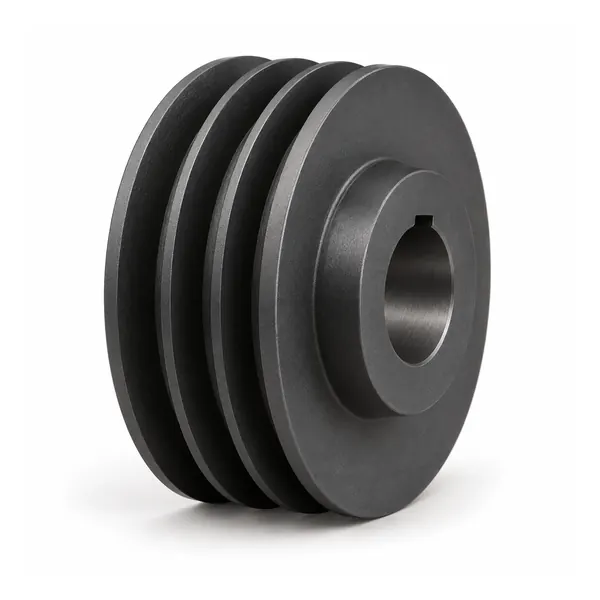
Utilizzare questa famiglia quando l'azionamento di lavoro utilizza 3 scanalature a V SPA attive. Il numero di scanalature è il primo filtro, non la selezione finale. Confrontare P, O, tipo di costruzione, boccola conica e foro massimo nelle pagine dei singoli modelli e conservare l'interfaccia dell'albero allegata alla registrazione dell'acquisto.
Da dove cominciare
Per le sostituzioni, fotografare la trasmissione installata prima dello smontaggio. Annotare la marcatura, la sezione della cinghia, l'albero, la sede della chiavetta e la marcatura della boccola. Per una nuova trasmissione, partire dal rapporto di velocità e dall'ingombro di installazione piuttosto che da un diametro esterno arbitrario.
Le dimensioni SPA adiacenti possono condividere lo stesso numero di scanalature pur utilizzando diverse configurazioni di boccole o di costruzione. Aprire la pagina del modello prima di inviare la richiesta di preventivo.
Panoramica della costruzione a 3 scanalature
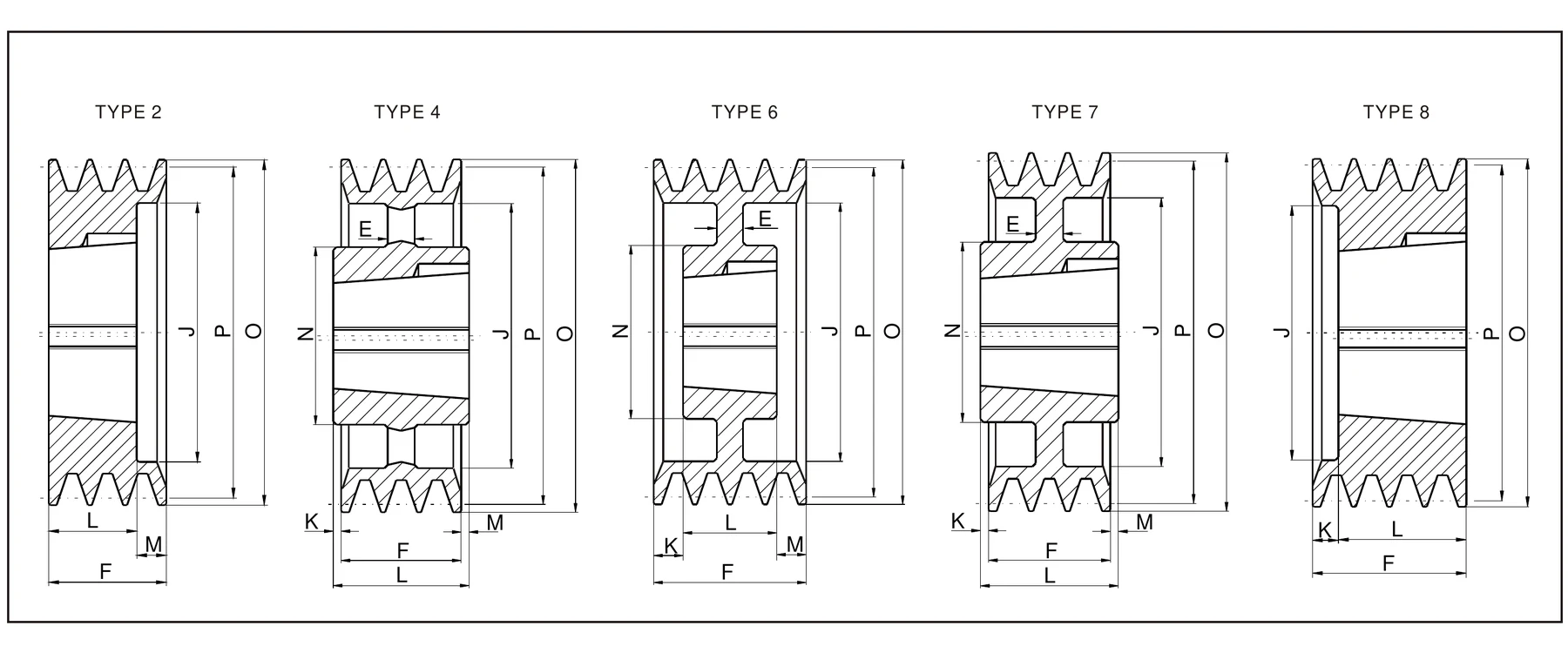
La riga del singolo modello identifica il tipo applicabile. Non copiare le dimensioni del mozzo o della lettera da un modello adiacente.
Variabili di selezione
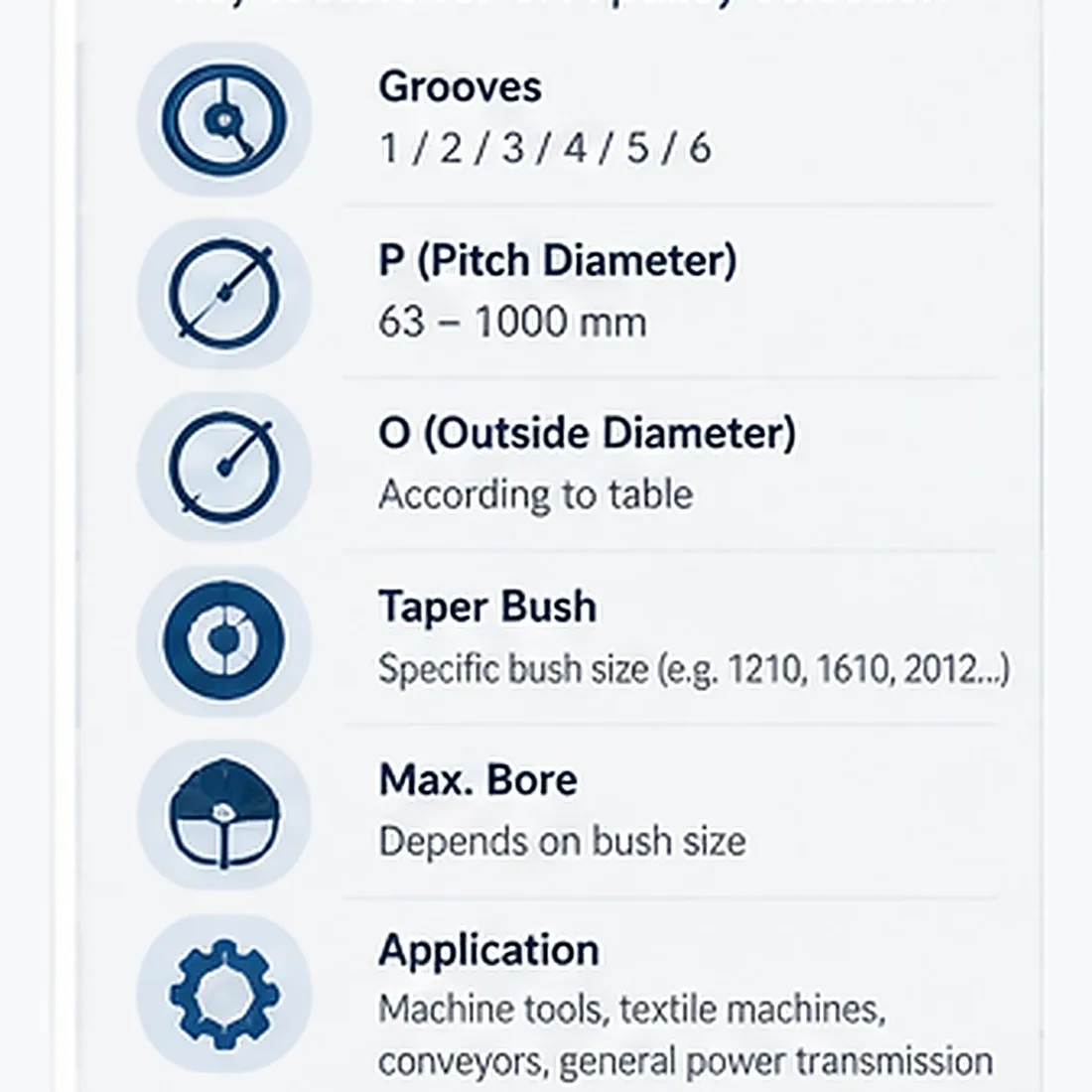
P e O
Mantieni separati entrambi i riferimenti di diametro.
Bush e bore
Verificare le dimensioni effettive dell'albero; il diametro massimo non corrisponde al diametro ordinato.
Tipo di costruzione
Utilizzare il tipo per selezionare la vista tecnica e la disposizione degli hub corrette.
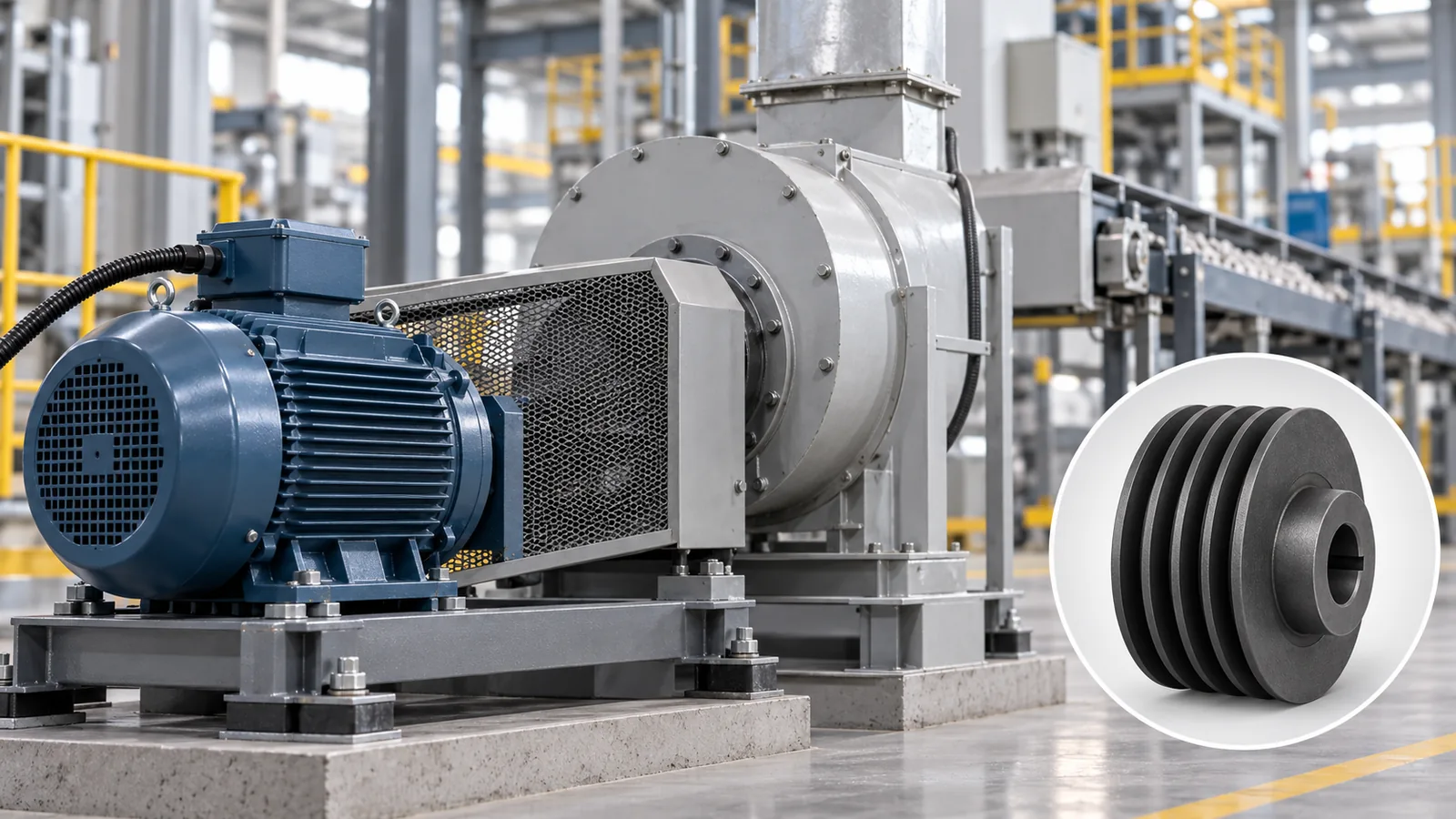
Il contesto applicativo può aggiungere domande relative a compiti, ambiente e accesso ai servizi, ma non modifica i dati specifici del modello. Tale separazione mantiene chiari la selezione tecnica e il contesto operativo.
Come confrontare i modelli
Seleziona i modelli in base all'identità completa, quindi convalida la boccola e l'albero effettivo. Controlla eventuali disegni esatti disponibili quando la posizione del mozzo o il gioco assiale sono importanti. Se non è disponibile un disegno esatto per un modello, richiedi il disegno controllato anziché considerare una vista di famiglia come geometria esatta.
Gamma di modelli pubblicati
Puleggia per cinghia trapezoidale SPA 71-03 a 3 scanalature
P 71 · O 76.5 · Bush 1108
Visualizza i dati tecnici →Puleggia per cinghia trapezoidale SPA 75-03 a 3 scanalature
P 75 · O 80.5 · Bush 1210
Visualizza i dati tecnici →Puleggia per cinghia trapezoidale SPA 80-03 a 3 scanalature
P 80 · O 85.5 · Bush 1210
Visualizza i dati tecnici →Puleggia per cinghia trapezoidale SPA 85-03 a 3 scanalature
P 85 · O 90.5 · Bush 1210
Visualizza i dati tecnici →Puleggia per cinghia trapezoidale SPA 90-03 a 3 scanalature
P 90 · O 95.5 · Bush 1610
Visualizza i dati tecnici →Puleggia per cinghia trapezoidale SPA 95-03 a 3 scanalature
P 95 · O 100.5 · Bush 1610
Visualizza i dati tecnici →Puleggia per cinghia trapezoidale SPA 100-03 a 3 scanalature
P 100 · O 105.5 · Bush 1610
Visualizza i dati tecnici →Puleggia per cinghia trapezoidale SPA 106-03 a 3 scanalature
P 106 · O 111.5 · Bush 1610
Visualizza i dati tecnici →Puleggia per cinghia trapezoidale SPA 112-03 a 3 scanalature
P 112 · O 117.5 · Bush 2012
Visualizza i dati tecnici →Puleggia per cinghia trapezoidale SPA 118-03 a 3 scanalature
P 118 · O 123.5 · Bush 2012
Visualizza i dati tecnici →Puleggia per cinghia trapezoidale SPA 125-03 a 3 scanalature
P 125 · O 130.5 · Bush 2012
Visualizza i dati tecnici →Puleggia per cinghia trapezoidale SPA 132-03 a 3 scanalature
P 132 · O 137.5 · Bush 2012
Visualizza i dati tecnici →Puleggia per cinghia trapezoidale SPA 140-03 a 3 scanalature
P 140 · O 145.5 · Bush 2517
Visualizza i dati tecnici →Puleggia per cinghia trapezoidale SPA 150-03 a 3 scanalature
P 150 · O 155.5 · Bush 2517
Visualizza i dati tecnici →Puleggia per cinghia trapezoidale SPA 160-03 a 3 scanalature
P 160 · O 165.5 · Bush 2517
Visualizza i dati tecnici →Puleggia per cinghia trapezoidale SPA 170-03 a 3 scanalature
P 170 · O 175.5 · Bush 2517
Visualizza i dati tecnici →Puleggia per cinghia trapezoidale SPA 180-03 a 3 scanalature
P 180 · O 185.5 · Bush 2517
Visualizza i dati tecnici →Puleggia per cinghia trapezoidale SPA 190-03 a 3 scanalature
P 190 · O 195.5 · Bush 2517
Visualizza i dati tecnici →Puleggia per cinghia trapezoidale SPA 200-03 a 3 scanalature
P 200 · O 205.5 · Bush 2517
Visualizza i dati tecnici →Puleggia per cinghia trapezoidale SPA 212-03 a 3 scanalature
P 212 · O 217.5 · Bush 2517
Visualizza i dati tecnici →Puleggia per cinghia trapezoidale SPA 224-03 a 3 scanalature
P 224 · O 229.5 · Bush 2517
Visualizza i dati tecnici →Puleggia per cinghia trapezoidale SPA 250-03 a 3 scanalature
P 250 · O 255.5 · Bush 2517
Visualizza i dati tecnici →Puleggia per cinghia trapezoidale SPA 280-03 a 3 scanalature
P 280 · O 285.5 · Bush 2517
Visualizza i dati tecnici →Puleggia per cinghia trapezoidale SPA 315-03 a 3 scanalature
P 315 · O 320.5 · Bush 3020
Visualizza i dati tecnici →Puleggia per cinghia trapezoidale SPA 355-03 a 3 scanalature
P 355 · O 360.5 · Bush 3020
Visualizza i dati tecnici →Puleggia per cinghia trapezoidale SPA 400-03 a 3 scanalature
P 400 · O 405.5 · Bush 3020
Visualizza i dati tecnici →Puleggia per cinghia trapezoidale SPA 450-03 a 3 scanalature
P 450 · O 455.5 · Bush 3020
Visualizza i dati tecnici →Puleggia per cinghia trapezoidale SPA 500-03 a 3 scanalature
P 500 · O 505.5 · Bush 3020
Visualizza i dati tecnici →Puleggia per cinghia trapezoidale SPA 560-03 a 3 scanalature
P 560 · O 565.5 · Bush 3020
Visualizza i dati tecnici →Puleggia per cinghia trapezoidale SPA 630-03 a 3 scanalature
P 630 · O 635.5 · Bush 3020
Visualizza i dati tecnici →Puleggia per cinghia trapezoidale SPA 800-03 a 3 scanalature
P 800 · O 805.5 · Bush 3535
Visualizza i dati tecnici →Puleggia per cinghia trapezoidale SPA 1000-03 a 3 scanalature
P 1000 · O 1005,5 · Boccola 3535
Visualizza i dati tecnici →Come confrontare righe di modello adiacenti senza creare una corrispondenza errata
Procedete attraverso la famiglia di componenti seguendo un ordine controllato. Innanzitutto, mantenete fissi il profilo SPA e il numero di scanalature. Successivamente, confrontate i riferimenti P e O. Quindi, verificate la designazione della boccola conica e i requisiti effettivi dell'albero. Infine, confermate il tipo di costruzione e le dimensioni indicate con lettere che influiscono sulla posizione assiale o sul gioco della protezione. Questo ordine riduce la possibilità che una corrispondenza di diametro apparentemente ideale nasconda una diversa disposizione di montaggio.
Quando si sostituisce un modello basandosi su misurazioni effettuate sul campo, è fondamentale annotare la provenienza di ciascun valore. Un diametro esterno misurato, una marcatura sulla puleggia e un valore riportato su un vecchio disegno rappresentano tre fonti di informazione diverse. Sebbene possano coincidere, non devono essere considerate tacitamente equivalenti. In caso di discrepanze tra due riferimenti, è necessario inviarli entrambi con la richiesta di offerta, specificando quale dei due la macchina dovrà controllare.
Per gli acquisti di modelli misti, elencare ogni modello completo e la relativa quantità su una riga separata. L'ordine commerciale può comunque essere combinato, ma l'identità tecnica di ogni riga rimane intatta. Ciò è particolarmente utile quando diverse macchine condividono lo stesso profilo della cinghia ma utilizzano alberi di dimensioni diverse o un numero diverso di scanalature.
Lista di controllo per gli acquisti a livello di categoria
Sostituzione
Prima di rimuovere la trasmissione, fotografate il modello e i segni delle boccole, misurate l'albero e identificate il profilo della cinghia. Utilizzate la pagina del modello per confrontare la vista costruttiva corretta.
Nuove attrezzature
Partite dal rapporto di velocità richiesto, dalla famiglia di cinghie, dall'albero e dall'ingombro di installazione. Non utilizzate un diametro esterno arbitrario come vincolo di progettazione iniziale.
Requisiti personalizzati
Mantieni separata la geometria standard SPA da qualsiasi modifica controllata dal disegno. Specifica materiale speciale, finitura, foro, sede per chiavetta o ispezione solo quando il progetto lo richiede.
Prima di emettere un ordine di acquisto, verificare che il modello completo, la quantità e l'interfaccia dell'albero siano visibili nella scheda d'ordine. Se l'installazione dipende da un offset del mozzo preciso o da una dimensione specifica, allegare il disegno aggiornato anziché affidarsi a una foto del prodotto. In questo modo, acquisti e manutenzione saranno sempre allineati con lo stesso riferimento tecnico.
Confronto tra modelli a 3 scanalature: note pratiche per la decisione
All'interno della famiglia SPA a 3 scanalature, il numero di scanalature rimane fisso, mentre il diametro, la boccola e i dettagli costruttivi variano a seconda del modello. L'acquirente dovrebbe essere in grado di risalire a ogni decisione importante, identificandola tramite la marcatura del modello, un riferimento al disegno, una misurazione o un requisito specifico della macchina. Quando i dati provengono da fonti diverse, è importante mantenere separati i riferimenti fino a quando non siano stati armonizzati. Ciò è particolarmente importante per il diametro della puleggia, la posizione del mozzo e l'interfaccia dell'albero, poiché componenti visivamente simili possono presentare diverse configurazioni costruttive.
Per la sostituzione, iniziare con il gruppo di trasmissione ancora assemblato. Fotografare entrambe le superfici delle pulegge, la linea della cinghia, l'estremità dell'albero e qualsiasi marcatura leggibile. Annotare il numero di scanalature attive e la denominazione della cinghia prima di smaltirle. Se una protezione o un telaio limitano l'accesso, misurare l'ingombro assiale e radiale disponibile. Queste osservazioni spiegano l'installazione in un modo che una puleggia rimossa su un banco di lavoro non può.
Per un nuovo progetto, l'ordine è diverso ma il principio di controllo rimane lo stesso. Definire innanzitutto il profilo della cinghia desiderato, il rapporto di velocità, l'albero, la sede della chiavetta e lo spazio di installazione. Quindi confrontare i modelli all'interno della famiglia di numero di scanalature corretta. Non partire da un componente disponibile e rimodellare la trasmissione attorno ad esso, a meno che il progetto della macchina non accetti intenzionalmente tale modifica.
Nella preparazione della richiesta di offerta (RFQ), è fondamentale distinguere l'identità standard del prodotto dai requisiti specifici del progetto. I requisiti relativi a materiali, finitura, bilanciamento, tolleranze o ispezione devono essere indicati solo se effettivamente vincolati dal progetto. In questo modo, la richiesta di offerta standard risulta più efficiente ed si evita che un requisito specifico del progetto venga applicato a ogni puleggia della gamma.
Prima di passare dalla categoria al modello
Confermate la quantità, la posizione sulla macchina e l'identità tecnica. Una pagina di categoria è utile per restringere il campo, ma è nella pagina del singolo modello che si specificano la boccola, il tipo di costruzione e le dimensioni. Conservate la pagina del modello o il relativo disegno approvato insieme alla documentazione d'acquisto.
Se l'esigenza è una manutenzione urgente, resistete alla tentazione di scegliere il ricambio che più si avvicina visivamente. Un breve ritardo per verificare la cinghia, l'albero e il riferimento costruttivo è solitamente meno costoso che installare un componente che sposta l'allineamento della cinghia o che non può essere rimosso nello spazio di servizio disponibile.
Strumenti di selezione correlati
Utilizzare il guida all'interfaccia conico-boccola quando il collegamento dell'albero è aperto e il Lista di controllo dei dati della richiesta di offerta (RFQ) prima di inviare una richiesta di modello misto.