Move from identification to a controlled quotation
SPA pulley selection is most reliable when identification, dimensions, shaft interface and machine context are reviewed in a consistent order. The guides below are organised around the questions maintenance teams, engineers and buyers need to answer before releasing an RFQ.
SPA Pulley Dimensions
Technical selection and RFQ guidance.
SPA Pulley Size Chart
Technical selection and RFQ guidance.
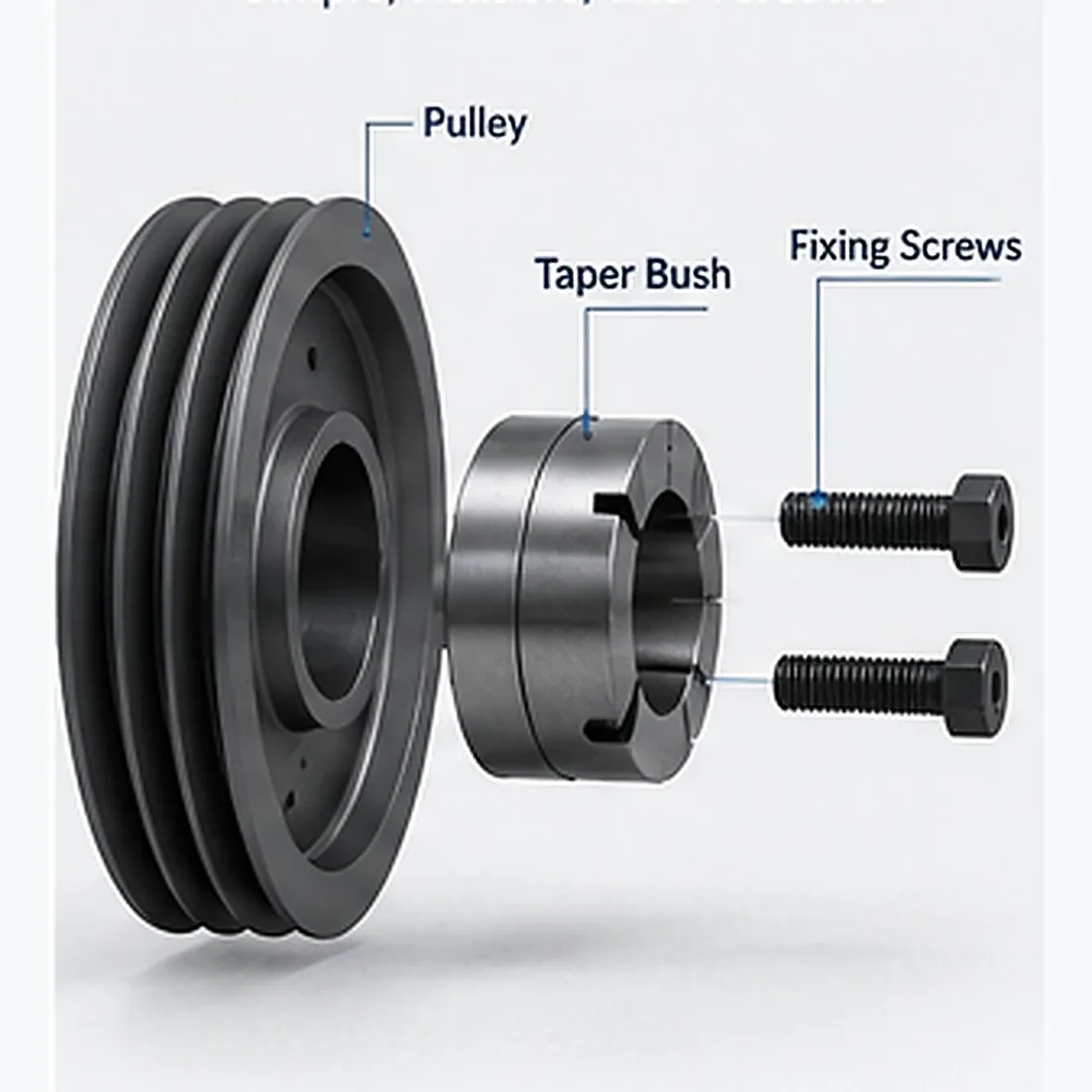
SPA Taper-Bush Selection
Technical selection and RFQ guidance.
SPA Groove Count Selection
Technical selection and RFQ guidance.
Replacement Measurement
Technical selection and RFQ guidance.
Alignment and Installation
Technical selection and RFQ guidance.
RFQ Data Checklist
Technical selection and RFQ guidance.
Measure, classify, compare, then quote
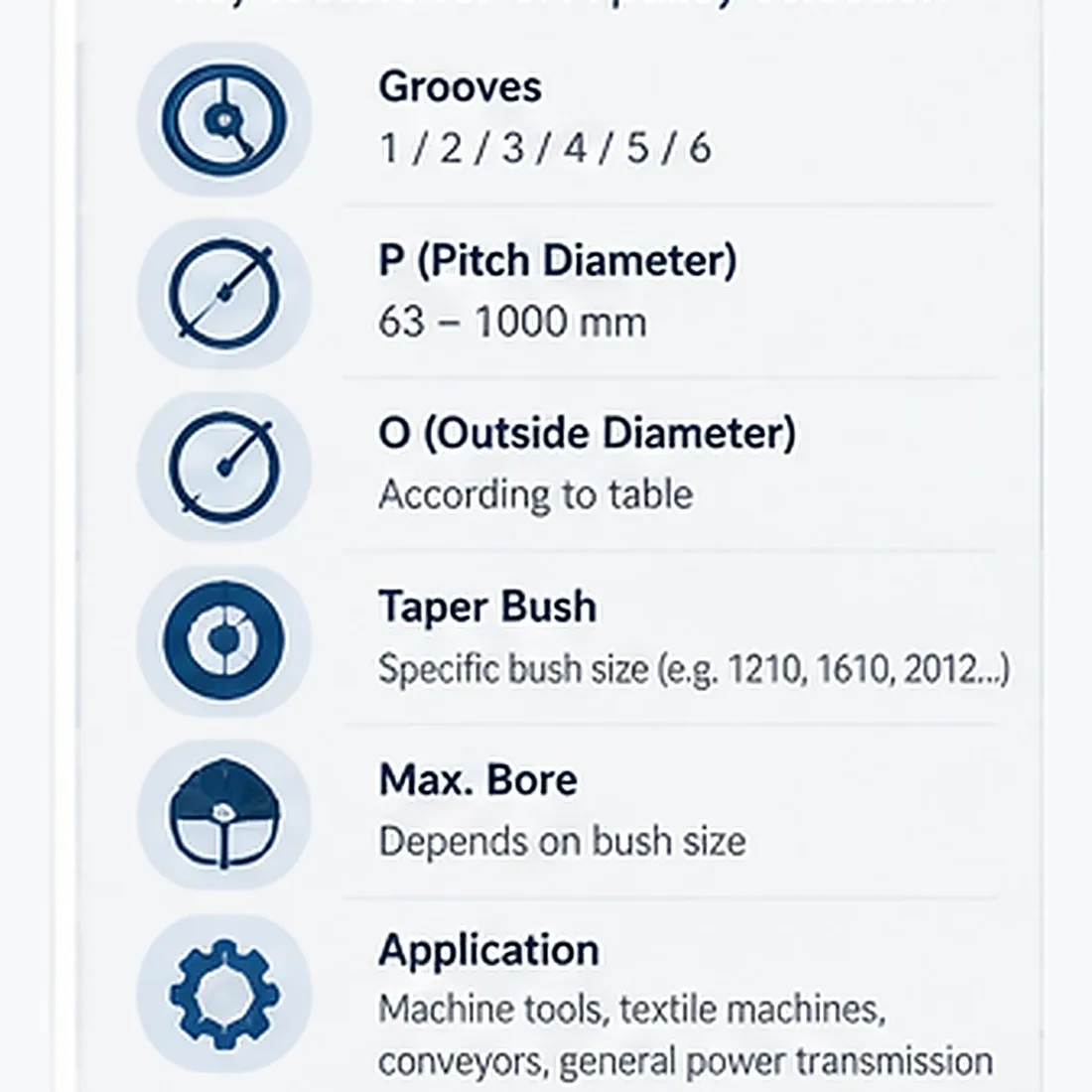
Begin with the SPA belt family, active groove count, model marking or drawing, diameter references and shaft interface. Use the individual model page to compare P, O, taper-bush designation, maximum bore and construction type.
Application context comes after product identity. It adds the duty, environment, service access and installation information needed to judge whether a standard model is appropriate for the machine.
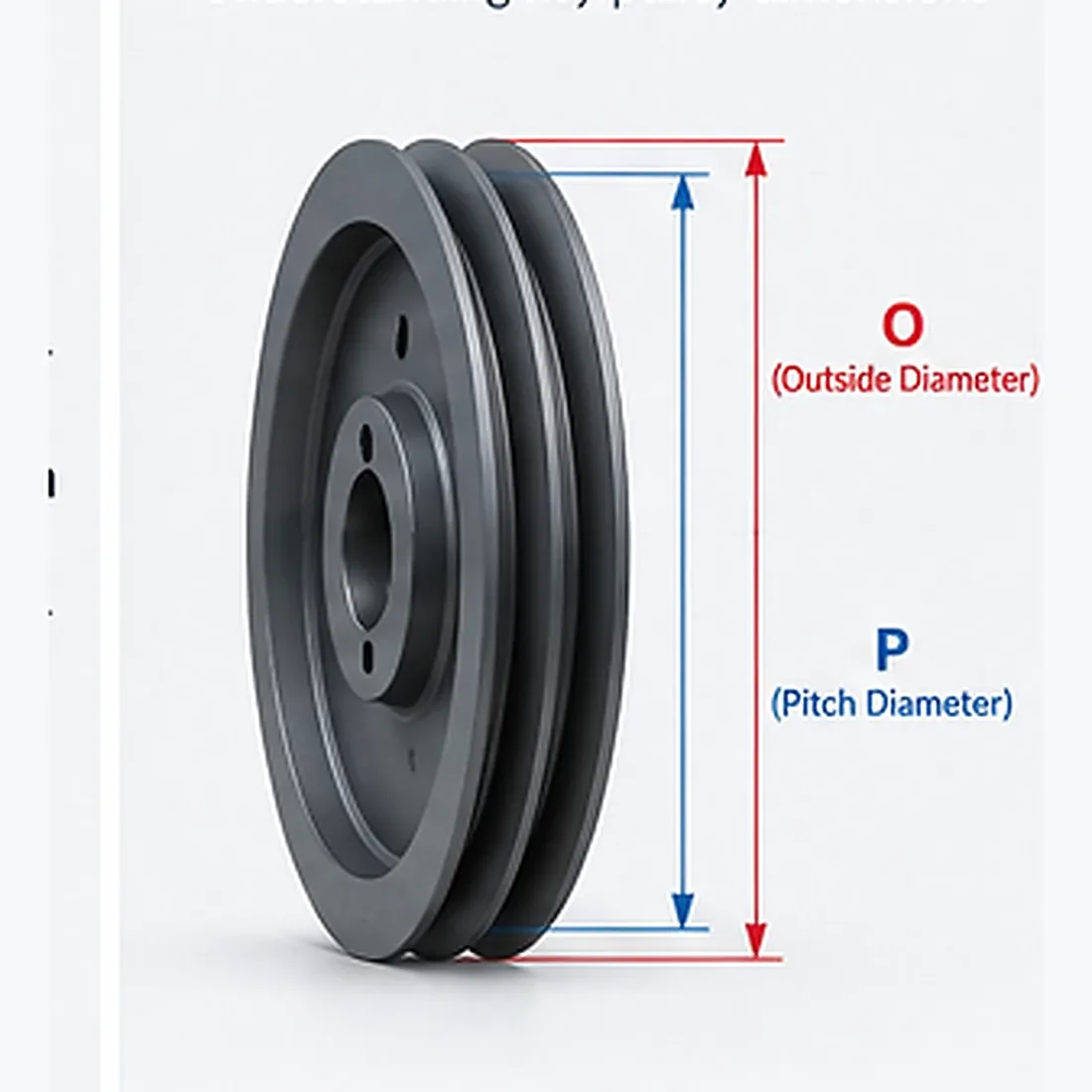
Keep P, O and field measurements separate
A measured outside diameter is useful during replacement work, but it should not be silently treated as the same reference as P or O. Record where each number came from and compare it to the model data before making a substitution.
Confirm the taper bush, shaft and keyway together
Maximum bore is a model limit rather than the finished bore to order. Keep the taper-bush designation, actual shaft diameter, keyway information and installation space together in the RFQ. This is particularly important when a visually similar pulley uses a different hub arrangement.
प्रतिस्थापन
Capture markings and photographs before removal, then compare field measurements with the correct model and construction view.
New design
Define belt family, drive relationship, shaft and installation envelope first, then shortlist models inside the correct groove family.
Drawing-controlled requirement
Keep special bore, keyway, finish, material or inspection requirements clearly separated from the standard model identity.
Check belt line, axial position and service access
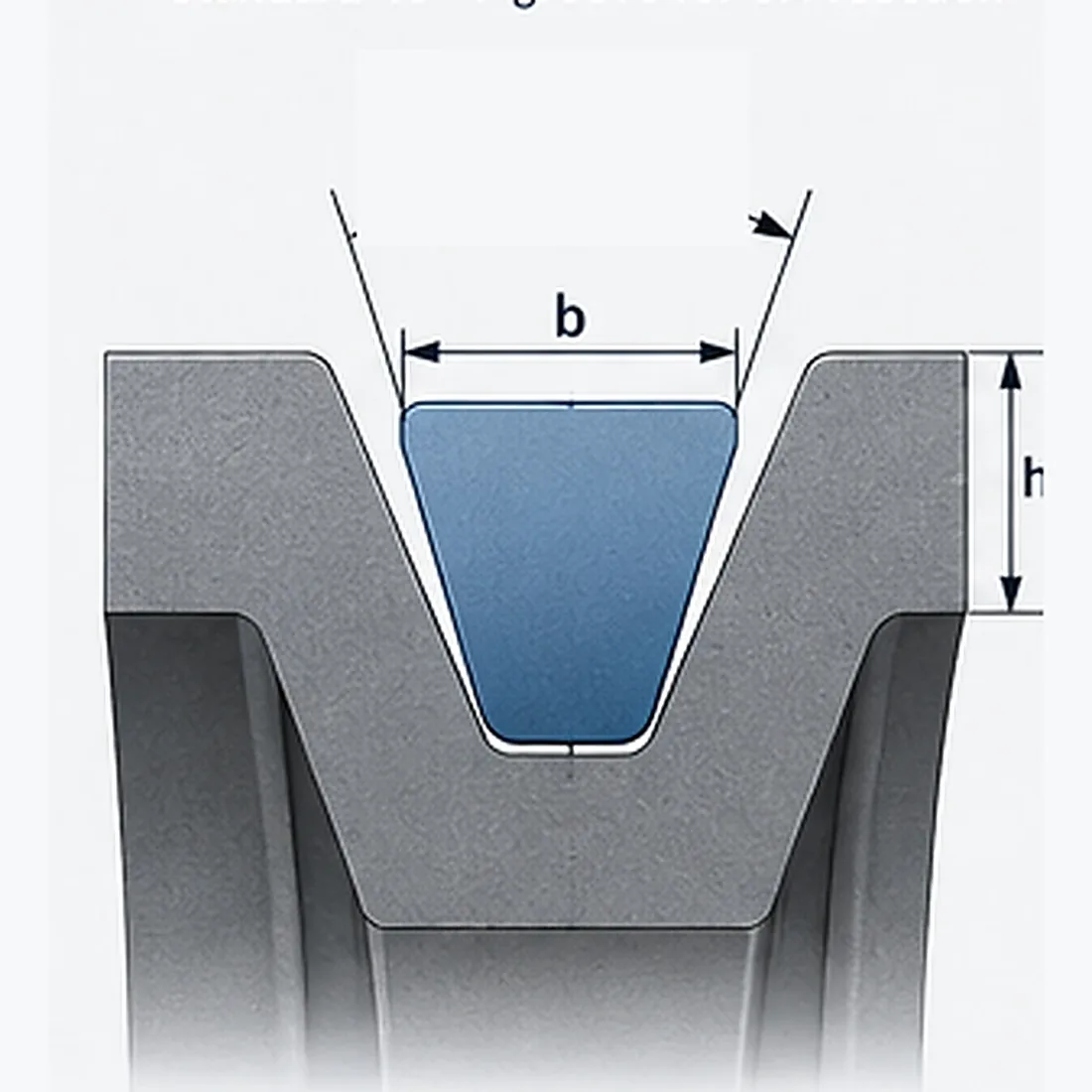
Construction type and letter dimensions become important when the pulley must clear a guard, bearing housing or adjacent component. A technically correct model can still create an installation problem if the hub position or removal space is ignored.
Use the alignment and installation guide to prepare the machine-side information before the order is released.