
Polias SPA de 6 canais
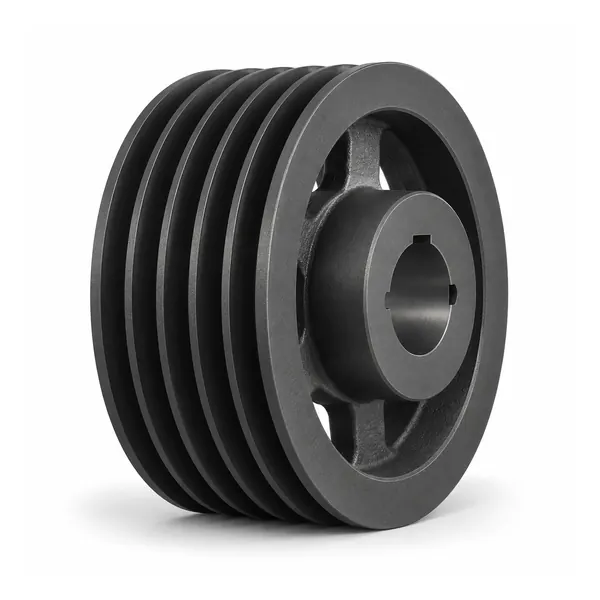
Use esta família quando o acionamento de trabalho utilizar 6 ranhuras em V SPA ativas. A quantidade de ranhuras é o primeiro filtro, não a seleção final. Compare P, O, tipo de construção, bucha cônica e diâmetro máximo do furo nas páginas de cada modelo e mantenha a interface do eixo anexada ao registro de compra.
Por onde começar?
Para trabalhos de substituição, fotografe a unidade instalada antes da desmontagem. Registre a marcação, a seção da correia, o eixo, a chaveta e a marcação da bucha. Para uma nova unidade, comece pela relação de velocidade e pelas dimensões de instalação, em vez de usar um diâmetro externo arbitrário.
Tamanhos adjacentes de SPA podem compartilhar a mesma quantidade de ranhuras, mesmo utilizando buchas ou configurações de construção diferentes. Abra a página do modelo antes de enviar a solicitação de cotação.
Visão geral da construção de 6 ranhuras
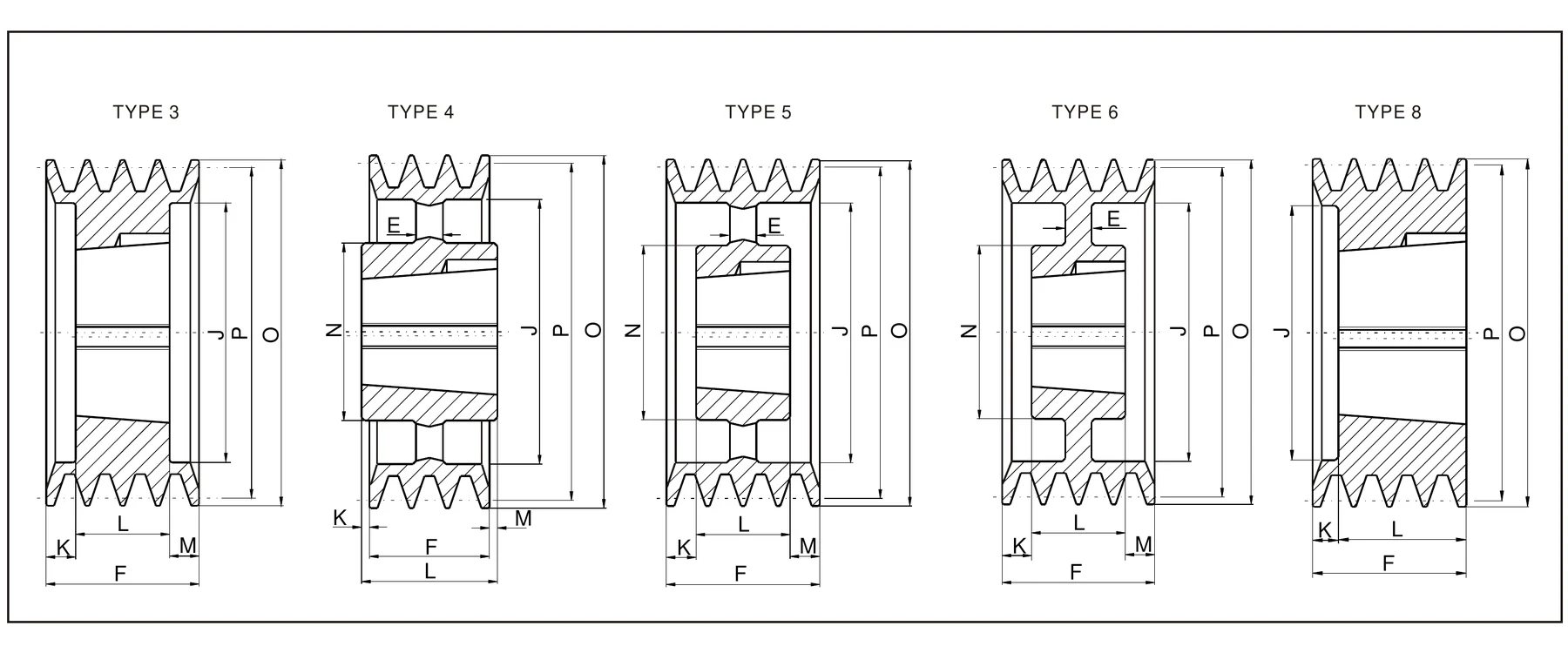
A linha do modelo individual identifica a qual tipo se aplica. Não copie as dimensões do cubo ou da letra de um modelo vizinho.
Variáveis de seleção
P e O
Mantenha as duas referências de diâmetro separadas.
Arbusto e furo
Confirme a exigência real do eixo; o diâmetro máximo não é o diâmetro encomendado.
Tipo de construção
Use o tipo para selecionar a visualização técnica e a configuração do hub corretas.
O contexto da aplicação pode adicionar questões sobre responsabilidades, ambiente e acesso a serviços, mas não altera os dados específicos do modelo. Essa separação mantém a seleção técnica e o contexto operacional claros.

Como comparar modelos
Selecione os modelos com base na identidade completa do modelo e, em seguida, valide a bucha e o eixo real. Verifique qualquer desenho técnico disponível quando a posição do cubo ou a folga axial forem importantes. Se um desenho técnico não estiver disponível para um modelo, solicite o desenho controlado em vez de considerar uma vista de família como geometria exata.
Gama de modelos publicada
Polia de correia em V SPA 100-06 com 6 canais
P 100 · O 105,5 · Bush 1615
Ver dados técnicos →Polia de correia em V SPA 106-06 com 6 canais
P 106 · O 111,5 · Bush 2012
Ver dados técnicos →Polia de correia em V SPA 112-06 com 6 canais
P 112 · O 117,5 · Bush 2012
Ver dados técnicos →Polia de correia em V SPA 118-06 com 6 canais
P 118 · O 123,5 · Bush 2012
Ver dados técnicos →Polia de correia em V SPA 125-06 com 6 canais
P 125 · O 130,5 · Bush 2012
Ver dados técnicos →Polia de correia em V SPA 132-06 com 6 canais
P 132 · O 137,5 · Bush 2517
Ver dados técnicos →Polia de correia em V SPA 140-06 com 6 canais
P 140 · O 145,5 · Bush 2517
Ver dados técnicos →Polia de correia em V SPA 150-06 com 6 canais
P 150 · O 155,5 · Bush 2517
Ver dados técnicos →Polia de correia em V SPA 160-06 com 6 canais
P 160 · O 165,5 · Bush 2517
Ver dados técnicos →Polia de correia em V SPA 180-06 com 6 canais
P 180 · O 185,5 · Bush 3020
Ver dados técnicos →Polia de correia em V SPA 200-06 com 6 canais
P 200 · O 205,5 · Bush 3020
Ver dados técnicos →Polia de correia em V SPA 224-06 com 6 canais
P 224 · O 229,5 · Bush 3020
Ver dados técnicos →Polia de correia em V SPA 250-06 com 6 canais
P 250 · O 255,5 · Bush 3020
Ver dados técnicos →Polia de correia em V SPA 280-06 com 6 canais
P 280 · O 285,5 · Bush 3535
Ver dados técnicos →Polia de correia em V SPA 315-06 com 6 canais
P 315 · O 320,5 · Bush 3535
Ver dados técnicos →Polia de correia em V SPA 355-06 com 6 canais
P 355 · O 360,5 · Bush 3535
Ver dados técnicos →Polia de correia em V SPA 400-06 com 6 canais
P 400 · O 405,5 · Bush 3535
Ver dados técnicos →Polia de correia em V SPA 450-06 com 6 canais
P 450 · O 455,5 · Bush 3535
Ver dados técnicos →Polia de correia em V SPA 500-06 com 6 canais
P 500 · O 505,5 · Bush 3535
Ver dados técnicos →Polia de correia em V SPA 560-06 com 6 canais
P 560 · O 565,5 · Bush 3535
Ver dados técnicos →Polia de correia em V SPA 630-06 com 6 canais
P 630 · O 635,5 · Bush 4040
Ver dados técnicos →Polia de correia em V SPA 800-06 com 6 canais
P 800 · O 805,5 · Bush 4040
Ver dados técnicos →Polia de correia em V SPA 1000-06 com 6 canais
P 1000 · O 1005.5 · Bucha 4545
Ver dados técnicos →Como comparar linhas adjacentes de um modelo sem criar uma correspondência falsa?
Analise a família de componentes em uma ordem controlada. Primeiro, mantenha o perfil SPA e o número de ranhuras fixos. Em seguida, compare as referências P e O. Depois, verifique a designação da bucha cônica e a exigência real do eixo. Por fim, confirme o tipo de construção e as dimensões que afetam a posição axial ou a folga da proteção. Essa ordem reduz a chance de uma correspondência de diâmetro atraente ocultar um arranjo de montagem diferente.
Quando um modelo estiver sendo substituído por medições de campo, anote a origem de cada número. Um diâmetro externo medido, uma marcação na polia e um valor em um desenho antigo são três fontes de informação diferentes. Elas podem coincidir, mas não devem ser simplesmente combinadas. Se duas referências entrarem em conflito, envie ambas com a solicitação de cotação e especifique qual delas a máquina deverá controlar.
Para compras de modelos mistos, liste cada modelo completo e a respectiva quantidade em uma linha separada. O pedido comercial ainda pode ser consolidado, mas a identidade técnica de cada linha permanece intacta. Isso é especialmente útil quando várias máquinas compartilham o mesmo perfil de correia, mas utilizam eixos de tamanhos diferentes ou números de ranhuras distintos.
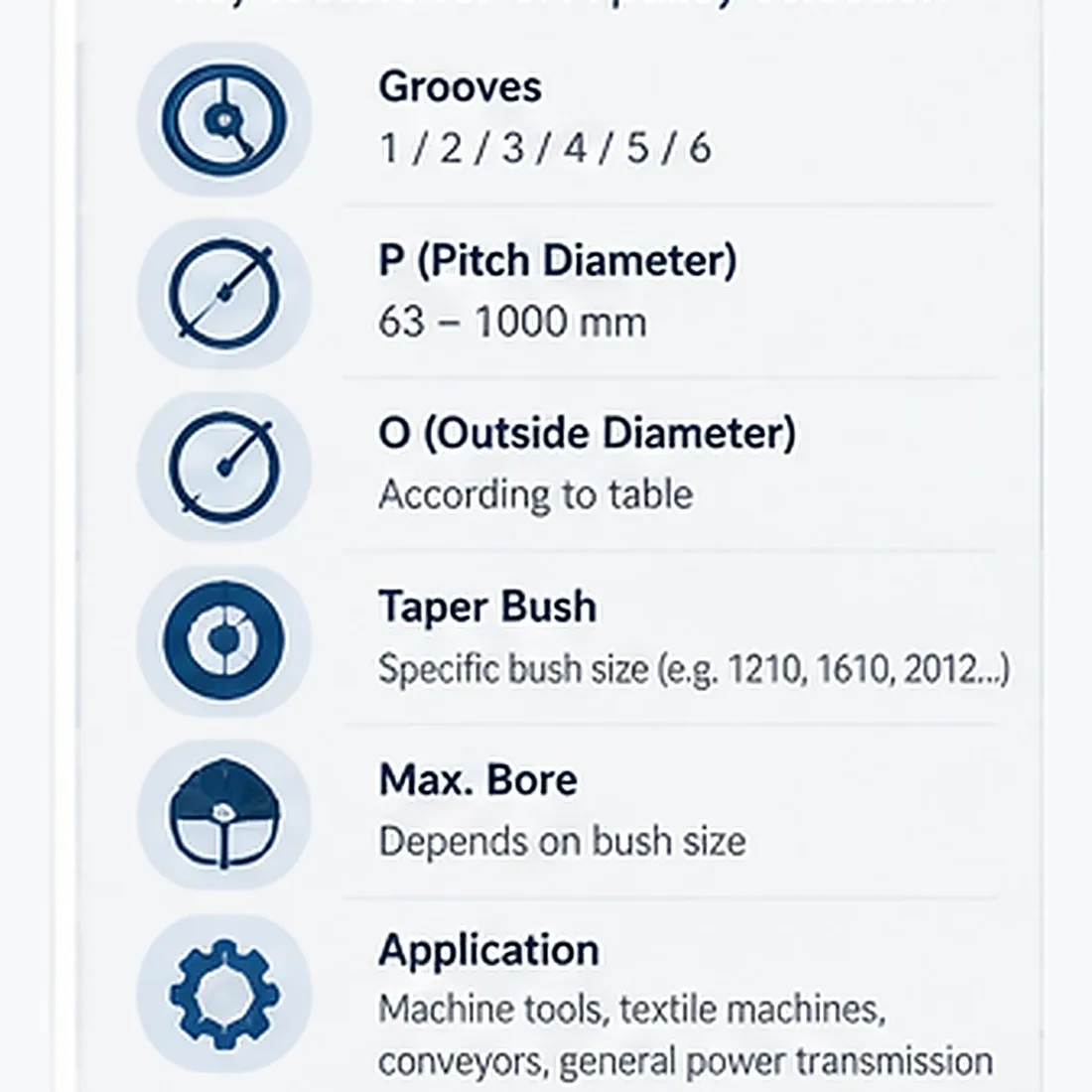
Lista de verificação de compras por categoria
Substituição
Fotografe a unidade antes da remoção, registre o modelo e as marcações da bucha, meça o eixo e identifique o perfil da correia. Use a página do modelo para comparar com a vista de construção correta.
Novos equipamentos
Comece considerando a relação de velocidade necessária, a família de correias, o eixo e as condições de instalação. Não utilize um diâmetro externo arbitrário como restrição inicial de projeto.
Requisito personalizado
Mantenha a geometria padrão da SPA separada de qualquer alteração controlada por desenho. Indique material especial, acabamento, furo, rasgo de chaveta ou inspeção somente quando o projeto exigir.
Antes de emitir uma ordem de compra, confirme se o modelo completo, a quantidade e a interface do eixo estão visíveis no registro do pedido. Se a instalação depender de um deslocamento exato do cubo ou de uma dimensão específica, anexe o desenho técnico atualizado em vez de se basear em uma foto do produto. Isso garante que os departamentos de compras e manutenção utilizem a mesma referência técnica.
Comparação de modelos de 6 ranhuras: notas práticas para tomada de decisão
Na família de polias SPA de 6 ranhuras, o número de ranhuras permanece fixo, enquanto o diâmetro, a bucha e os detalhes de construção variam ao longo da gama de modelos. O comprador deve ser capaz de rastrear cada decisão importante até uma marcação do modelo, uma referência de desenho, uma medição ou um requisito declarado da máquina. Quando os dados provêm de fontes diferentes, mantenha essas referências separadas até que sejam conciliadas. Isso é especialmente importante para o diâmetro da polia, a posição do cubo e a interface do eixo, pois peças visualmente semelhantes podem usar diferentes configurações de construção.
Para trabalhos de substituição, comece enquanto a transmissão ainda estiver montada. Fotografe ambas as faces da polia, a linha da correia, a extremidade do eixo e qualquer marcação legível. Registre a quantidade de ranhuras ativas e a designação da correia antes de descartá-las. Se uma proteção ou estrutura limitar o acesso, meça o espaço axial e radial disponível. Essas observações explicam a instalação de uma maneira que uma polia removida em uma bancada não consegue.
Para um novo projeto, a ordem é diferente, mas o princípio de controle é o mesmo. Defina primeiro o perfil da correia desejado, a relação de velocidade, o eixo, a chaveta e o espaço de instalação. Em seguida, compare os modelos dentro da família de número de ranhuras correta. Não comece com uma peça que esteja disponível e remodele a transmissão em torno dela, a menos que o projeto da máquina aceite intencionalmente essa alteração.
Ao preparar a solicitação de cotação (RFQ), separe a identidade padrão do produto dos requisitos específicos do projeto. Requisitos de material, acabamento, balanceamento, tolerância ou inspeção devem ser declarados apenas quando forem realmente controlados pelo projeto. Isso mantém a solicitação padrão eficiente e evita que um requisito específico do projeto seja aplicado a todas as polias da linha.
Antes de passar da categoria para o modelo
Confirme a quantidade e a posição da máquina, bem como a identificação técnica. Uma página de categoria é útil para restringir a busca, mas é na página do modelo específico que a bucha, o tipo de construção e as dimensões da letra se tornam detalhadas. Guarde essa página do modelo ou o desenho aprovado junto com o registro da compra.
Se a necessidade for de manutenção urgente, resista à tentação de escolher a peça visualmente mais semelhante. Um pequeno atraso para confirmar a correia, o eixo e a referência de construção geralmente é menos dispendioso do que instalar uma peça que desloque o alinhamento da correia ou que não possa ser removida dentro do espaço disponível para manutenção.
Ferramentas de seleção relacionadas
Use o guia de interface de bucha cônica quando a conexão do eixo está aberta, e o Lista de verificação de dados da RFQ antes de enviar uma solicitação de modelo misto.