
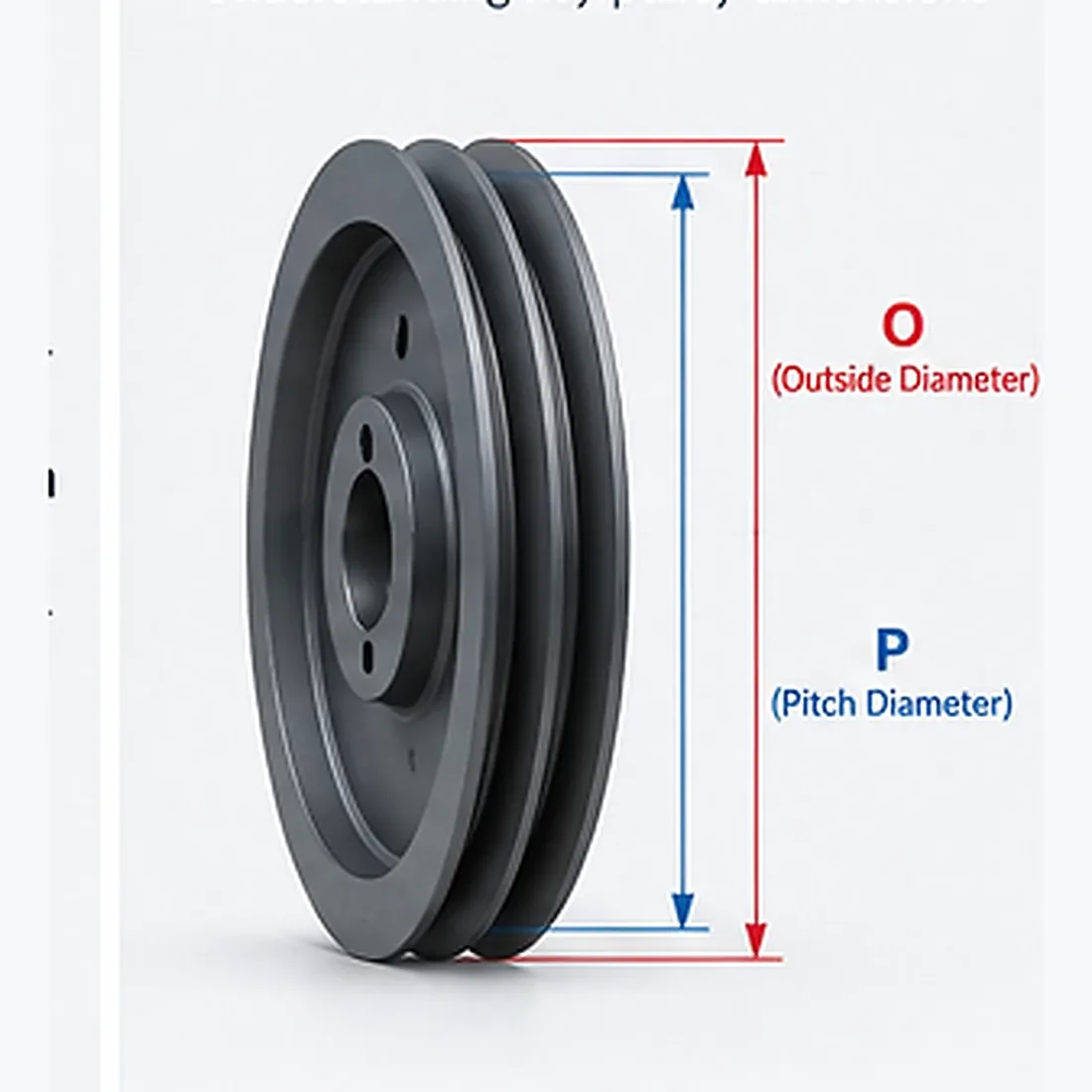
How to Measure a Replacement SPA Pulley
Use one consistent set of references from identification through quotation. Keep the SPA profile, active groove count, diameter reference, bush and actual shaft requirement attached to the same record.
When a field measurement, marking and drawing disagree, make the difference visible and resolve which reference controls before purchase.
Step-by-step review
- Identify the SPA belt family and model marking.
- Count active grooves.
- Keep P, O and field outside diameter distinct.
- Record bush, shaft and keyway.
- Check construction type and axial packaging.
- Add machine duty, environment and service access.
- Resolve discrepancies before order release.
What to send with the RFQ
Send model or drawing, quantity, belt section, groove count, shaft data and application. State special material, finish, balance or inspection only when the project actually requires it.
Standard catalogue pulleys are normally supplied against production-quantity MOQs, while larger or higher-value items may be accepted against practical order value. New customers may request 1-5 piece evaluation samples at sample pricing. Mixed-model orders can be combined toward a practical order value of USD 1,500. Special materials or processes follow their own production minimums. We focus on industrial and OEM supply rather than 1-2 piece retail replacement orders.
A practical method for resolving conflicting information
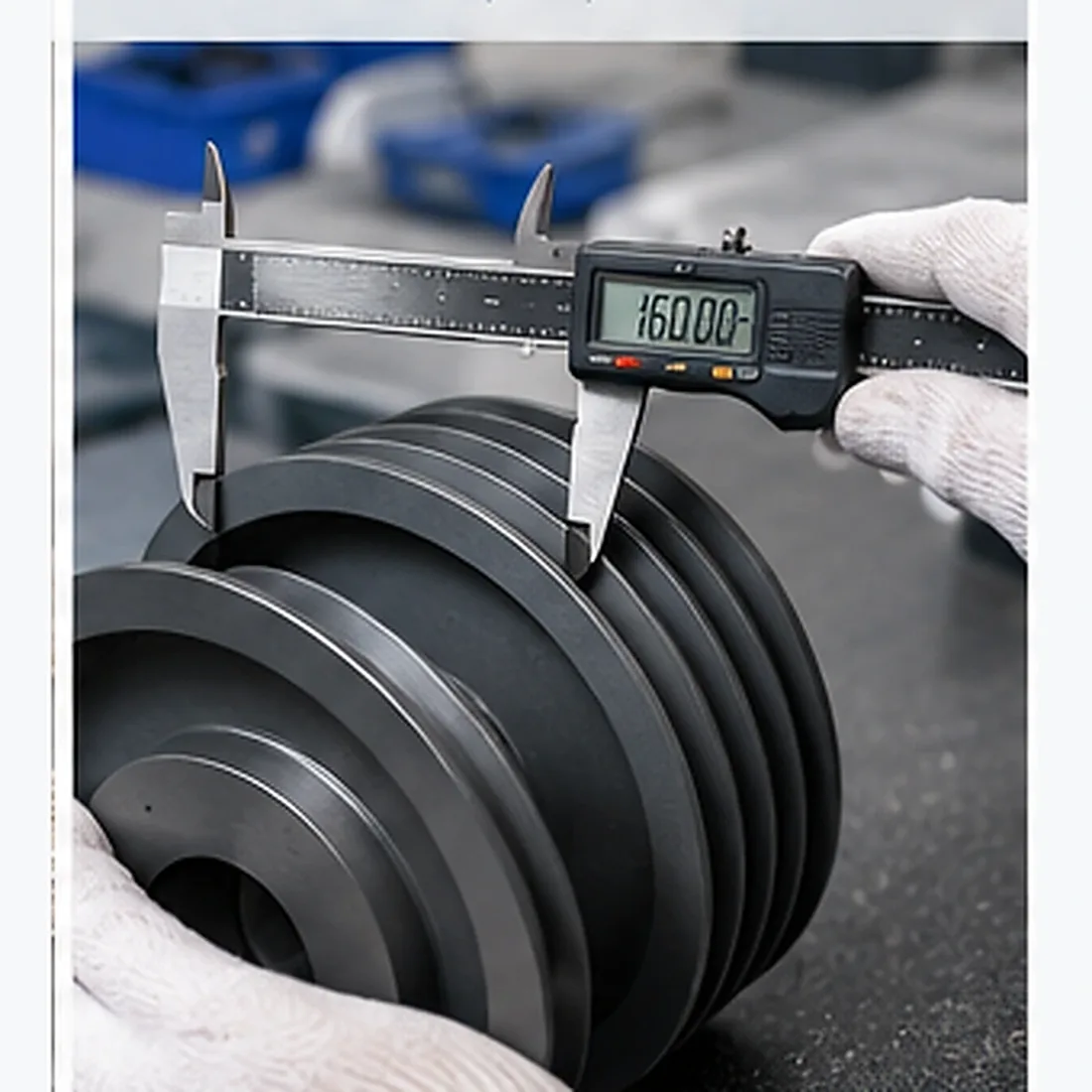
Industrial replacement work often begins with more than one reference: a model marking, an old drawing, a maintenance note and a field measurement. Treat these as separate observations until they are reconciled. Do not copy a number into a purchase request without preserving what it represents. For example, an outside measurement should remain labelled as an outside measurement until it is intentionally compared with a product-table reference.
When the model marking is readable, use it to open the correct product row, then compare groove count, diameter references, construction type and bush. When the marking is missing, build the identity from measurable features and the machine record. The goal is not to force the field part into the nearest model; the goal is to determine whether a standard model is genuinely the same configuration or whether the project needs a drawing-controlled route.
The shaft interface deserves a separate check. Record the actual shaft diameter and keyway. If a taper bush is installed, record its marking before removal if possible. A published maximum bore is not a finished-bore instruction and should never replace the real shaft requirement.
Axial packaging is another common source of error. A pulley can match belt profile and diameter but move the belt line because the hub arrangement differs. Use the construction drawing and machine envelope together whenever a guard, bearing housing or frame member limits space.
Finally, write open questions into the RFQ. An unknown dimension, unreadable bush marking or conflicting drawing revision is safer when it is visible. That gives the supplier a precise question to resolve before manufacture rather than a hidden assumption to discover after installation.
Document the accepted configuration
Once the project is resolved, keep the approved model, drawing revision, shaft interface and any special requirements together. Repeat orders should point to that accepted record rather than using a shorthand description. If the machine is changed later, update the record so the next order does not rely on obsolete information.
For maintenance teams, add before-removal and after-installation photographs. They are useful for service access and hub position, but they remain context, not dimensional authority. For purchasing teams, keep each mixed-model line item separate even when quantities are combined commercially.
This recordkeeping step is simple, but it turns a one-time replacement decision into reusable plant knowledge and reduces the chance of repeating the same identification work at the next service interval.
How to Measure a Replacement SPA Pulley: practical decision notes
The purpose of this guide is to make how to measure a replacement spa pulley repeatable across engineering, purchasing and maintenance records. A buyer should be able to trace every important decision to a model marking, a drawing reference, a measurement or a stated machine requirement. When the data comes from different places, keep those references separate until they have been reconciled. This is especially important for pulley diameter, hub position and the shaft interface, because visually similar parts can use different construction arrangements.
For replacement work, start while the drive is still assembled. Photograph both pulley faces, the belt line, the shaft end and any readable marking. Record the active groove count and belt designation before the belts are discarded. If a guard or frame limits access, measure the available axial and radial envelope. Those observations explain the installation in a way that a removed pulley on a workbench cannot.
For a new design, the order is different but the control principle is the same. Define the intended belt profile, speed relationship, shaft, keyway and installation space first. Then compare models inside the correct groove-count family. Do not begin with a part that happens to be available and reshape the drive around it unless the machine design intentionally accepts that change.
When preparing the RFQ, separate standard product identity from special project requirements. Material, finish, balance, tolerance or inspection requirements should be stated only when they are genuinely controlled by the project. This keeps a standard enquiry efficient and prevents a project-specific requirement from being applied to every pulley in the range.
How to document the accepted answer
After the open questions have been resolved, write the accepted configuration in a form that survives the current project. Include the model or drawing revision, groove count, bush or finished bore, actual shaft and keyway, and any special project requirement. Avoid shorthand such as “same as previous” unless the previous approved record is clearly identified.
When a field measurement was used to resolve the selection, keep the measurement reference with the value. When a drawing controls the result, keep the drawing revision. When a product-table row controls the standard part, keep the full model identity. These small details prevent a future buyer from mixing different reference values into one ambiguous number.
For a repeat order, verify that the machine has not been modified. For a new supplier or new manufacturing lot, restate any controlled inspection or documentation requirement rather than assuming it will carry over automatically. The objective is a clear technical handoff, not a longer document for its own sake.
Use the guide as a decision framework, not a substitute for the machine record
A general guide can explain how to read the data, but the actual machine still controls the final fit. Keep the accepted model or drawing with the equipment position, and retain the field measurements that were used to resolve the decision. This provides a clear audit trail if a later replacement appears different or a supplier asks which reference controlled the order.
Where the project uses a custom shaft, hub position or special acceptance requirement, record that change separately from the standard SPA model. This avoids turning one project-specific requirement into a false assumption about the whole product family. It also keeps later repeat orders aligned with the original machine rather than with a simplified product summary.
Finally, make commercial intent visible. A sample, a mixed maintenance order and repeat production have different planning implications even when the technical model is identical. Combining technical identity and quantity information in the first RFQ reduces unnecessary back-and-forth and helps keep the quotation focused on the real requirement.
Related technical paths
Compare the SPA model family, review the taper-bush interface, and use the RFQ data checklist when moving from the guide to a quotation.