Use the machine context to define the questions around the pulley
The same SPA product family can appear in different industrial drive arrangements. Application context helps identify duty, operating environment, access, guarding and maintenance information that should accompany the model request. It does not replace the model-specific diameter, bush or construction data.
Four practical application paths
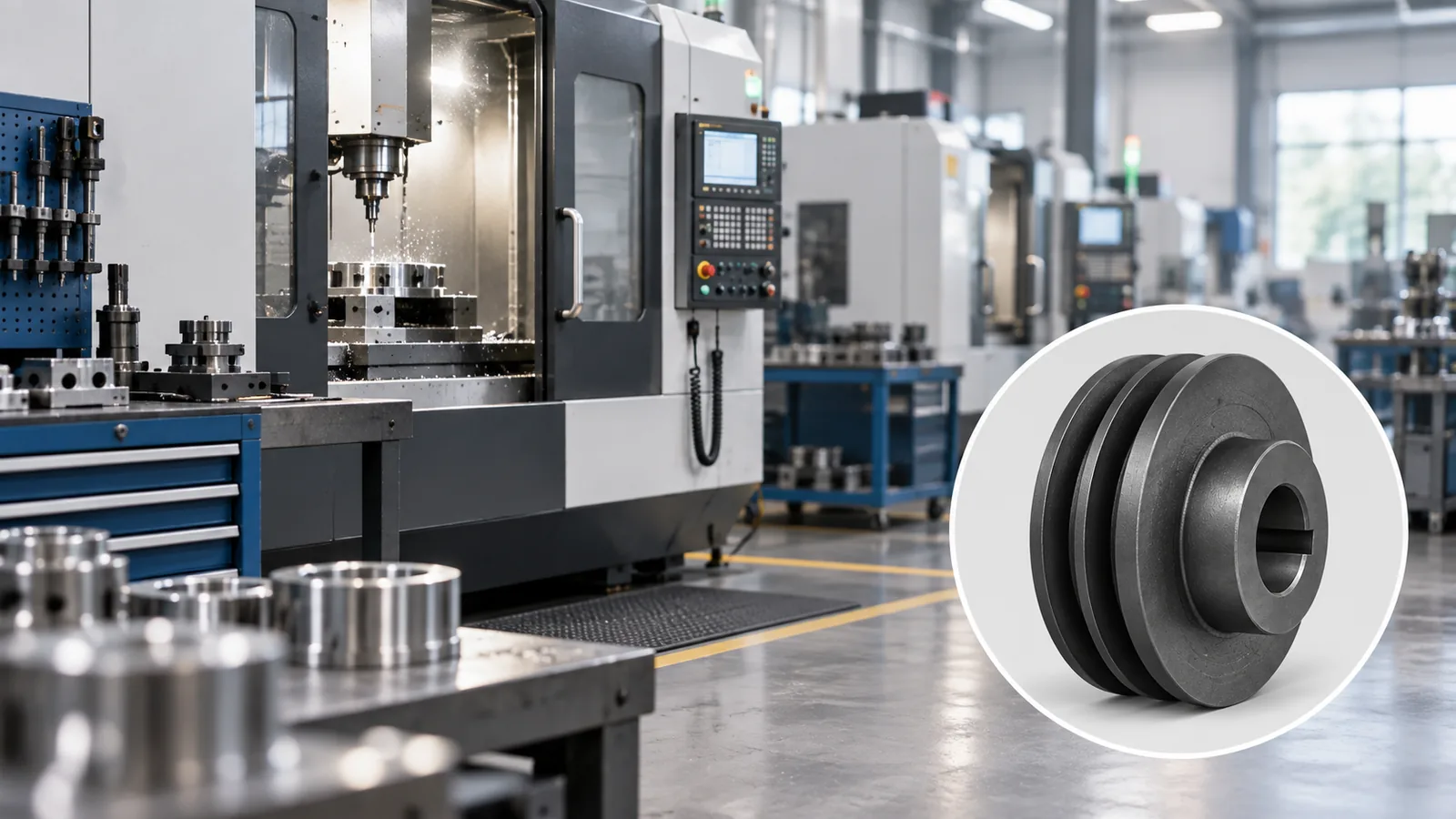
Machine tools
Record motor and driven-shaft arrangement, available service space, operating pattern and any replacement markings before choosing a model.
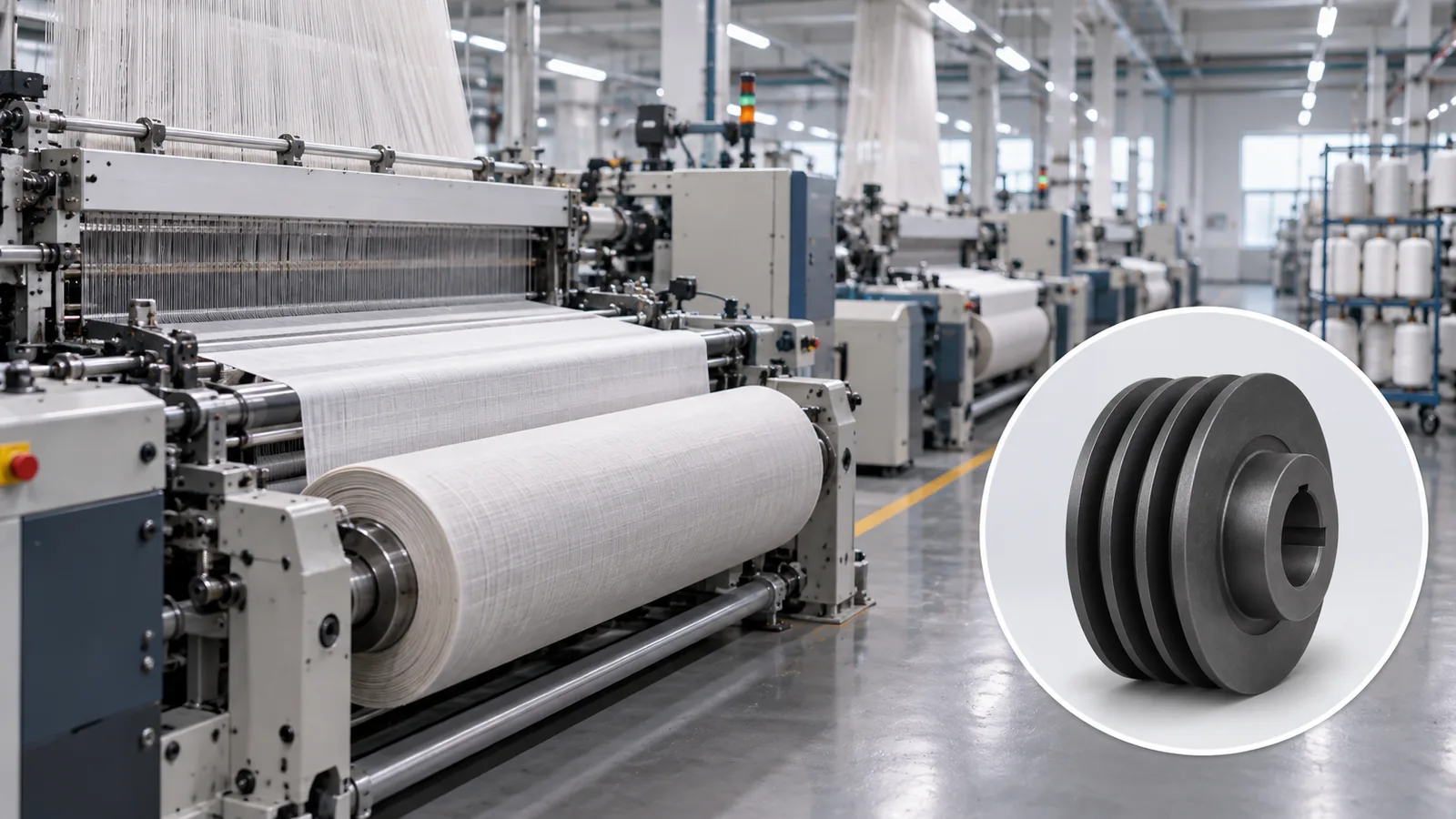
Textile machinery
Keep the pulley identity linked to the machine position, shaft and maintenance access, particularly where many similar drive stations operate nearby.
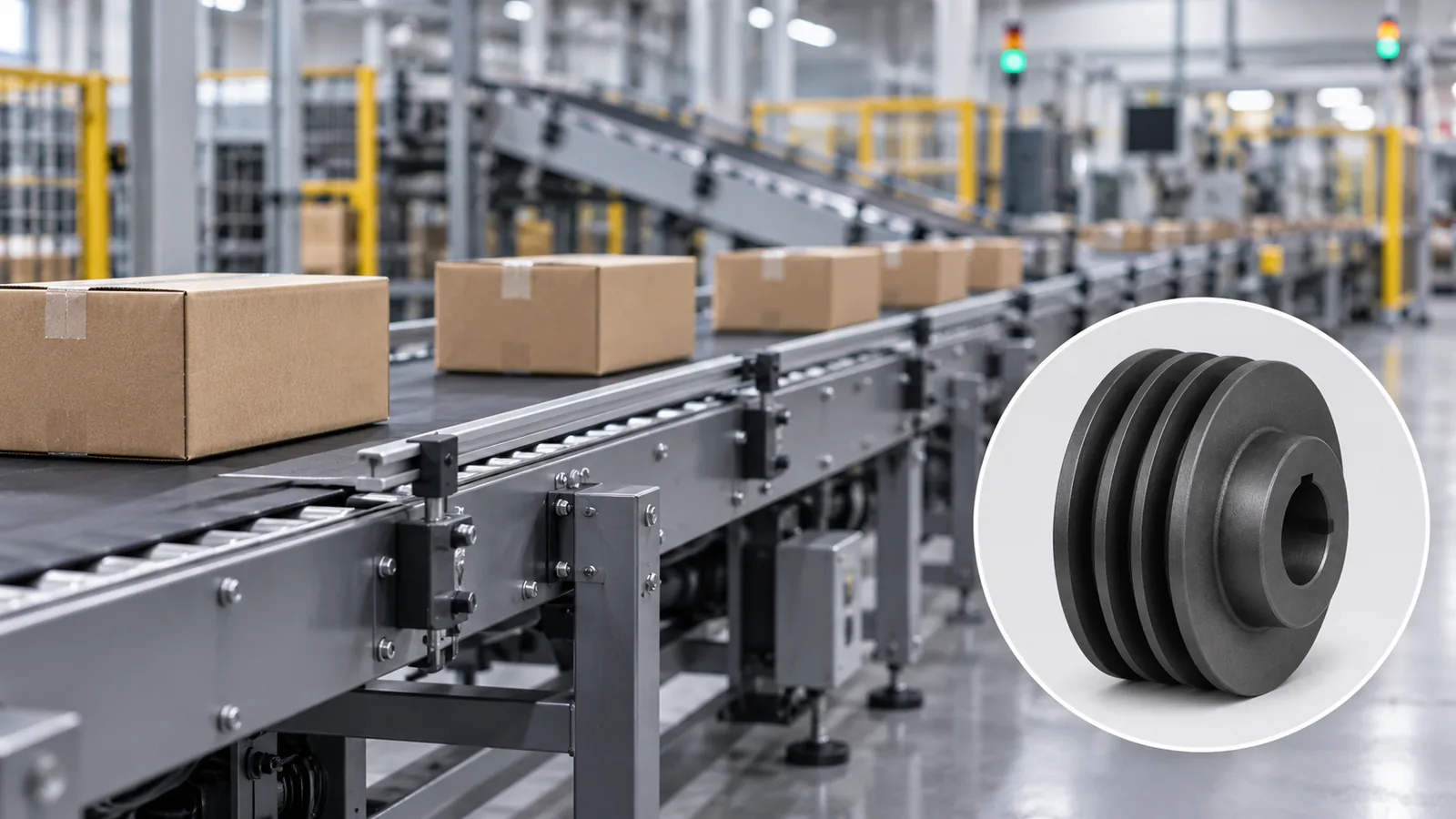
Conveyors
Note the driven equipment, access around guards, shaft interface and any environmental conditions that affect maintenance planning.
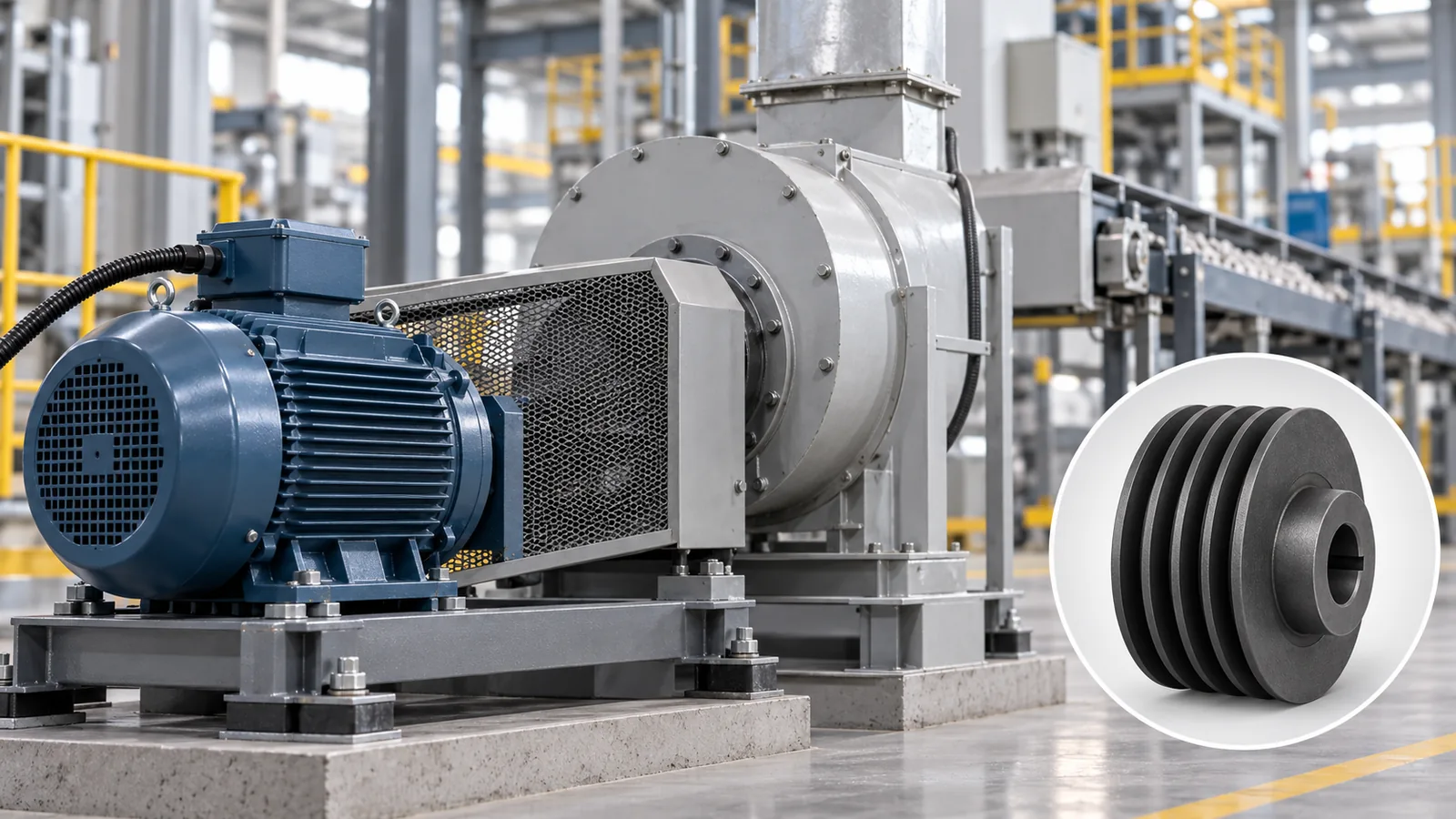
Motor-to-load drives
Use the motor and driven equipment as system context, then confirm the pulley model, belt family, groove count and shaft interface separately.
Capture the installed condition before disassembly
Photograph the drive, pulley faces, belt line and shaft end while the system is still assembled. Record the readable marking and the active groove count. This preserves installation context that can be difficult to reconstruct from a loose pulley on a bench.
When measurements and markings disagree, send both rather than forcing them into one value. The difference can be resolved during technical review.
Start from the drive requirement, not an arbitrary pulley diameter
For a new machine, define the intended belt family, speed relationship, shaft, keyway, installation envelope and access for fitting or removal. Then compare the SPA models that fit those controlled inputs.
Project-specific material, finish, balance or inspection requirements should be stated only when the machine specification actually requires them.